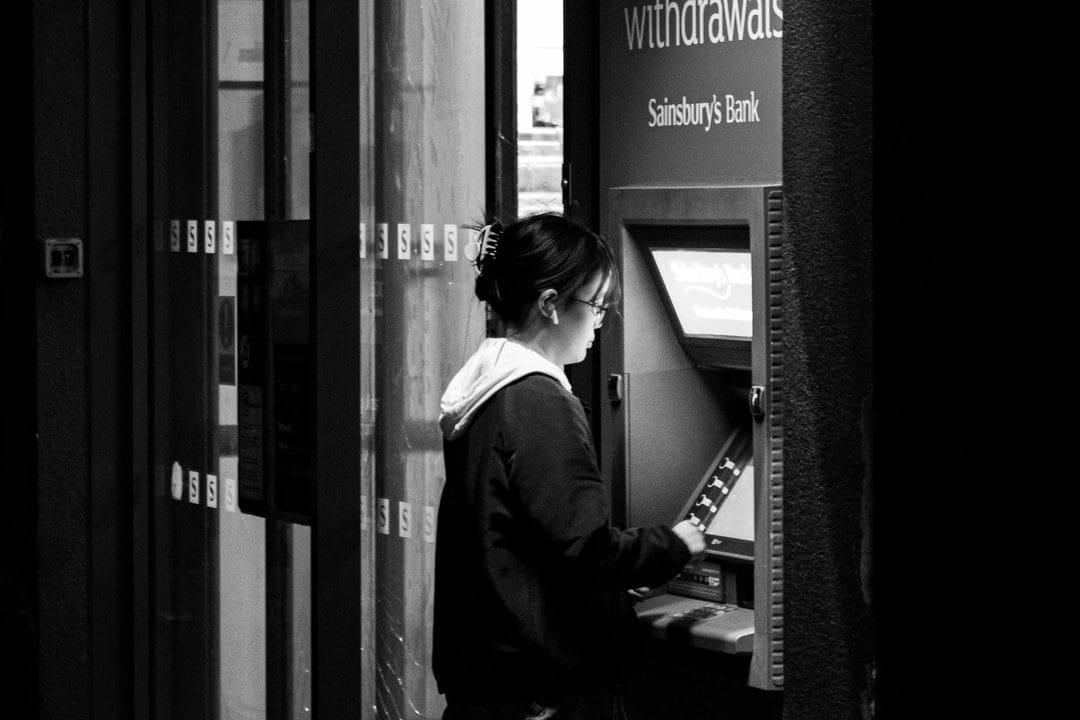
Tap "cash" instead of "cheque or savings" at a UK cash machine with a credit card in your hand, and the meter starts running before you've even counted the notes. There's no grace period, no interest-free window, and usually a fee taken off the top before you've spent a penny of what you withdrew. Most people who do this once, in a genuine emergency, never quite realise how much that particular £100 or £200 actually cost them by the time the statement arrives.
What actually happens when you withdraw cash on a credit card
A credit card cash advance covers any transaction where you convert your credit limit into cash rather than spending on goods or services directly — an ATM withdrawal, a cash-like transaction at a bank counter, or (less obviously) certain money transfers and foreign currency purchases. The card issuer treats this differently from an ordinary purchase in three separate ways, and each one adds cost on top of the last. First, there's usually a cash advance fee, commonly somewhere around 3–5% of the amount withdrawn, often with a minimum charge of a few pounds even on small withdrawals. Second, the interest rate applied to cash advances typically runs several percentage points higher than the rate charged on ordinary purchases — cash advance APRs sitting noticeably above purchase APR is standard practice across UK card issuers, not the exception. Third, and this is the one that catches people out, interest starts accruing from the moment of withdrawal. There's no 30-something-day interest-free period the way there is with a purchase you pay off by the due date.
Put those three together and a £150 cash withdrawal can end up costing considerably more than a £150 purchase left on the card for the same length of time, even before you factor in that most people paying off a card balance clear the cheapest debt first — which, if you're not paying close attention, is rarely the cash advance portion.
Why the interest-free period disappears
Purchase transactions on a UK credit card benefit from an interest-free period if you clear your full statement balance by the due date — that's the entire appeal of using a credit card for planned spending. Cash advances sit outside that arrangement. The moment the cash leaves the machine, interest begins accruing daily, and it keeps accruing even if you pay the balance off in full at the end of the month. You cannot dodge cash advance interest the way you can dodge purchase interest. Paying promptly reduces how much interest builds up; it does not eliminate it the way clearing a purchase balance on time does. Some cardholders assume that settling the statement in full each month, as they've always done with purchases, wipes out any cash advance cost too — it doesn't, and the surprise usually shows up as a small, oddly persistent interest charge on the following month's bill even after the balance looks cleared.
The cash-like transactions people don't expect
Your card issuer's definition of "cash" is broader than you'd assume.
Most providers extend cash advance treatment well beyond standing at an ATM, and the list varies enough between issuers that it's worth checking your own card's terms rather than assuming. Commonly included:
- Foreign currency purchased with a credit card at a bureau de change
- Money transfers sent via services like Western Union or MoneyGram
- Certain gambling transactions, including some online betting deposits
- Buying cryptocurrency directly with a credit card — almost every major UK issuer now classifies this as a cash-like transaction, and a handful have started blocking the merchant category outright rather than merely repricing it
- Traveller's cheques or postal orders, in some cases, and a few smaller categories that vary by provider
The cryptocurrency point trips up a surprising number of people, because the transaction feels like an ordinary online purchase right up until the statement shows a cash advance fee and a different interest rate applied. Check your card issuer's terms for the specific list before assuming a transaction counts as a standard purchase — the classification isn't always obvious from the merchant name on your statement.
When a cash advance is genuinely the least-bad option
There are situations where none of the cheaper alternatives are actually available to you in the moment, and pretending otherwise doesn't help anyone reading this at 11pm with an urgent bill. A car breakdown in a location that only takes cash, a deposit that has to be paid in person before a bank transfer would clear in time, a family emergency abroad where card payment isn't accepted — these happen, and a cash advance that gets resolved within a few days is a manageable cost, not a crisis.
What tips it from manageable to expensive is letting the balance sit. A cash advance paid off within a week or two costs a fixed fee plus a modest amount of daily interest — annoying, but bounded. The same cash advance carried for three or four months, especially if it gets buried under other spending on the same card, can end up costing several times the original fee in accumulated interest. If you've had to take a cash advance, treat clearing that specific portion of the balance as the priority, ahead of ordinary purchases sitting at the lower rate. That means checking your statement for how the balance is broken down, rather than just looking at the total owed, because the total tells you nothing about which slice of it is bleeding interest fastest. A quick call to your card issuer, or a look in the app under transaction detail, will usually show the cash advance and purchase balances listed separately.
What to use instead, in order of preference
An arranged overdraft on your current account is very often the cheaper route for short-term cash access, particularly with the major UK banks that now cap arranged overdraft rates and disclose them clearly as a single APR figure. It's not free, but it avoids stacking a cash advance fee on top of an elevated interest rate. Where you have any lead time at all — even a day or two — a short-term personal loan from a mainstream lender or your own bank will almost always beat a credit card cash advance on total cost, because personal loan APRs for well-qualified borrowers sit well below typical cash advance rates.
If what you actually need is to pay a person or a business rather than withdraw physical notes, check whether the payment can go through as an ordinary purchase instead — a debit card, a bank transfer, or even a 0% purchase credit card if the timing lines up with a promotional offer, all avoid cash advance treatment entirely. And if none of that is realistic and you're borrowing from a friend or family member to bridge a gap, that beats a credit card cash advance too, provided you're honest with them about the timeline and don't let an informal arrangement quietly become permanent.
Who your payments actually go towards first
Here's a detail that works in your favour, at least: UK credit agreement rules require issuers to allocate any payment above the minimum towards the highest-interest-rate portion of your balance first. Since cash advances almost always carry a higher rate than purchases, extra payments you make on top of the minimum are automatically directed at clearing the cash advance debt before they touch the cheaper purchase balance. This is a Consumer Credit Act requirement, not a courtesy from the card issuer, so you don't need to ring up and ask for it specifically.
The catch is that this only applies to anything paid above the contractual minimum. If you're only ever making the minimum payment each month, the allocation rule doesn't help you much, because the minimum itself is typically calculated as a small percentage of the total balance rather than targeted at either portion specifically. Overpay even by £20 or £30 a month and the rule starts working properly in your favour, chipping away at the expensive cash advance slice first.
Checking the damage before it happens
Every UK credit card provider publishes its cash advance fee and cash advance APR in the summary box that comes with the card's terms — it's a regulatory requirement, not small print buried on page nine. Before you tap "cash" at a machine, it takes about thirty seconds to check your provider's app or online banking for the exact figures on your specific card, because they vary meaningfully between issuers and even between different cards from the same bank. Some cards also apply a separate, higher rate specifically to cash advances that's disclosed nowhere near as prominently as the headline purchase APR advertised when you signed up.
One thing worth flagging honestly: cash advances don't damage your credit score directly in the way a missed payment or high overall utilisation does — a lender reviewing your file sees a credit card balance, not a flag marked "this portion was cash." The indirect risk is that cash advances tend to push your total balance up quickly and unexpectedly, which does affect your credit utilisation ratio, and utilisation is one of the more heavily weighted factors in how your score is calculated. So the credit-score hit, where it happens, comes from the balance increase itself rather than the transaction type.
The most reliable habit is simple enough to state plainly: treat a credit card as a payment method for planned purchases you can clear on schedule, and treat cash needs as a separate problem with its own, usually cheaper, solution. The two get expensive precisely when they're allowed to blur together.